
Rummy 500 - Card Game
FIOGONIA LIMITEDCard
4.62.06K Reviews
- Version
- 1.2.1
- Installs
- 1.00M
- Age Rating
- Everyone
Screenshots
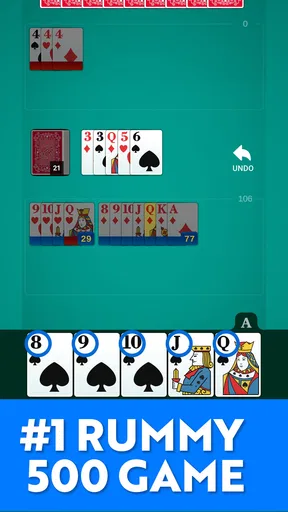
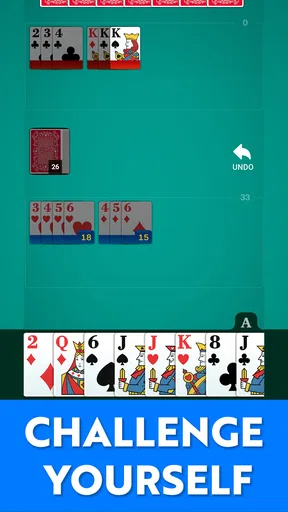
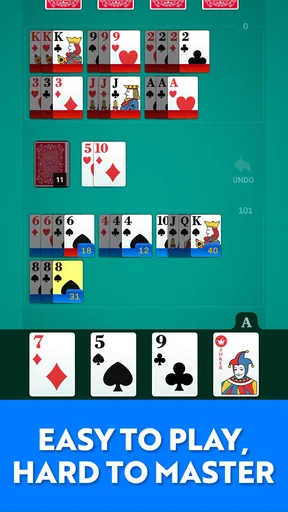
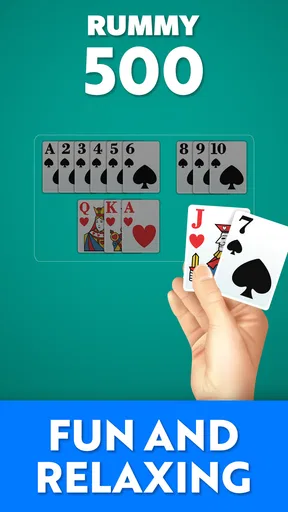

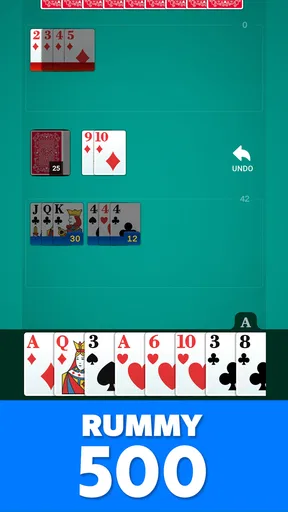

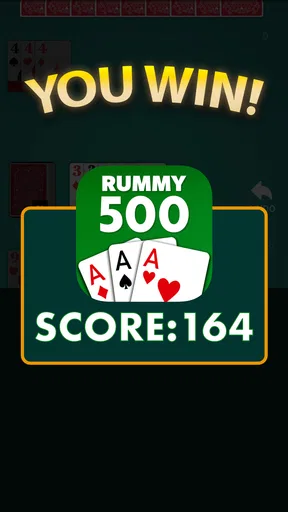
Our Review of Rummy 500 - Card Game
 Analysis by Appyee
I approached Rummy 500 as the kind of card game I could open for a few quiet minutes rather than a large, content-heavy mobile experience. That first impression proved accurate, but it undersells what makes it enjoyable. The rules are familiar enough to begin quickly, while the scoring creates more decisions than a simple matching game. In my experience, the best reason to keep it installed is the combination of readable cards, a computer opponent that does not feel completely passive, and a clean presentation that keeps attention on the hand.
Rummy 500 is most successful when treated as a focused solo card table. It does not try to turn Rummy into an elaborate adventure, a social network, or a visually noisy arcade game. That restraint works in its favor. I can play a short round while waiting somewhere, or settle into a longer session when I want something more thoughtful than a luck-only pastime.
How the card table feels in everyday play
The game belongs to the card category and follows the Rummy 500 format, so the central task is to build useful combinations while deciding when to draw, discard, and take advantage of cards already exposed. The familiar structure makes the opening minutes comfortable for anyone who has played a rummy variant before. For a newcomer, the large cards and uncluttered layout reduce the usual problem of trying to understand both the rules and a tiny interface at the same time.
I found the card size especially helpful on a phone. A mobile card game can become tiring when the hand is compressed into a narrow strip, forcing constant tapping or guesswork. Here, the presentation is designed around quick recognition. I can scan my hand, compare possible combinations, and make a decision without feeling that the interface is fighting me.
That matters because Rummy 500 is not only about collecting matching cards. The discard pile changes the value of what remains in your hand, and a card that looks unhelpful at one moment may become important after the next draw. The clean layout gives those small changes room to register. I spend less time searching for controls and more time asking whether a tempting pickup will improve my position or simply reveal too much about my plan.
The computer opponent is another important part of the experience. Smart AI is easy to claim in a short description, but what I value here is that the opponent gives me something to read. It is not enough to throw down combinations without considering the discard pile. I have to think about which cards I am making available and whether holding a card for one more turn is worth the risk.
That does not mean every hand feels like a contest between expert players. The AI is better understood as a steady practice partner than as a perfect strategist. That distinction is useful. A player learning the rhythm of Rummy 500 can make mistakes without being punished instantly, while an experienced player still has enough pressure to avoid playing on autopilot.
Small decisions matter more than fast tapping
One of the less obvious strengths is the way the scoring encourages restraint. It is tempting to chase a combination because the cards look close to fitting, but an incomplete hand can become expensive when the round ends. I learned to judge a possible meld against the cards I was carrying for other reasons. A promising sequence is not automatically a good sequence if it leaves several high-value cards stranded.
My practical approach is to review the hand before every discard rather than immediately choosing the newest card. I look for three things: combinations that are already secure, cards that could serve more than one purpose, and isolated cards that are becoming liabilities. This simple pause makes the game feel more deliberate and also helps reveal how the AI is shaping its own choices.
A second useful habit is to treat the discard pile as information, not merely as a source of cards. Taking a card can complete a meld, but it can also tell the opponent what kind of hand I am building. When I pick up from the pile, I try to know what the move accomplishes immediately. If the answer is only “this might help later,” I usually consider whether the extra information is worth it.
The third insight is about timing a round’s end. In many casual card games, making a combination as soon as possible feels automatically correct. In Rummy 500, I found that a slightly slower turn can be better if it reduces deadwood or keeps flexible cards available. The right decision depends on the hand, but the game rewards looking one turn beyond the obvious move.
A useful game for short breaks and longer concentration
I can imagine using this game in two very different everyday situations. During a short break, I might play a single hand because the rules are immediately accessible and the interface does not require preparation. On a quieter evening, I can play several rounds and pay closer attention to the way the discard pile develops. The same design supports both uses without demanding a complicated progression system before the game becomes interesting.
That flexibility is one reason the game feels more substantial than a basic solitaire alternative. Solitaire is excellent when I want complete control and no opponent to consider. This Rummy 500 experience is better when I want to test judgment against another hand, even if that hand is controlled by the device. The trade-off is that solitaire can be more relaxing, while this game asks me to stay alert to consequences.
It also compares favorably with visually crowded card apps. Some alternatives surround the table with animated effects, multiple currencies, events, or constant prompts. The cleaner approach here helps the actual card decisions stand out. Players who enjoy decoration, collection systems, or a strong sense of progression may find it plain, but I prefer that plainness when I am installing a game specifically to play cards.
Where the experience falls short
The main limitation is also connected to the game’s simplicity: the solo format can eventually feel narrow. If I want live competition with friends, a large community, or a broad selection of card modes, this is not the first place I would look. Its appeal depends on enjoying Rummy 500 itself and being satisfied with a focused match against the built-in opponent.
The AI creates a solid foundation, but no computer opponent can fully reproduce the unpredictability of playing with a person who has a different style. Against a human, I might face unusual risks, deliberate traps, or emotional decisions that are difficult to model. Here, the challenge is more consistent. That consistency is helpful for practice, yet it can make repeated sessions feel more predictable once I understand the opponent’s tendencies.
There is also a learning curve hidden behind the simple rules. Knowing how to form sets and runs is not the same as knowing when to expose them, what to discard, or how much risk to accept near the end of a round. The game does not become difficult because the controls are complicated; it becomes difficult because good play requires remembering what has appeared and estimating what the opponent may want.
That makes it less suitable for someone looking for a completely mindless time filler. I can play casually, but careless decisions have consequences. If I am tired and only want to tap through a few obvious moves, a simpler matching game may be a better fit. This title asks for enough attention that I notice when I am playing badly.
The free entry is welcome, although optional purchases are available from $4.99 to $29.99 per item. I would not install it expecting every card game to remain entirely outside a purchase system. My advice is to judge the basic play on its own merits first. The core appeal is the table, the hand management, and the AI; spending money should not be the reason to decide whether Rummy 500 suits you.
Who should install it
I would recommend it to players who already enjoy traditional rummy and want a straightforward phone version for solo sessions. It is also a good starting point for someone who understands basic card combinations but has not played Rummy 500 specifically. The large cards make the first contact less intimidating, while the scoring and discard decisions provide enough depth to reward practice.
It is particularly suitable for people who prefer a calm interface over a busy game hub. I can open it without needing to learn a collection of unrelated systems. The game’s identity is clear: sit at the table, inspect the hand, make the best move available, and see whether the next draw supports the plan.
Older phones are not automatically excluded, since the listed minimum requirement is Android 7.0 or later. The current release is version 1.1.3, which is useful to check before installing if a device is kept on an older operating system. On supported hardware, the restrained presentation should feel more comfortable than a graphics-heavy card title, especially for players who care about legibility over spectacle.
The Everyone content rating also makes it an easy recommendation for a broad household audience. I would still explain the rules to a young or inexperienced player rather than assuming the scoring will be obvious immediately. The age rating describes accessibility, but the strategic choices become clearer through a few hands of practice.
Who may prefer another card game
I would steer competitive multiplayer fans toward an app built around live matches, because the appeal here is not social interaction. Likewise, players who want tournaments, collectible decks, fantasy themes, or a long progression path may find the focused design too limited. This is a Rummy 500 game first, not a platform that happens to include rummy among many activities.
It may also be the wrong choice for someone who dislikes losing points because of cards left in hand. The scoring creates tension, but that tension can feel unforgiving when a nearly complete combination fails to arrive. I enjoy that risk because it gives each discard weight. Someone who wants guaranteed progress every round may have a more relaxing time with solitaire or a purely luck-driven card game.
Players who already know the variant well should consider what they want from the AI. If the goal is practice, repetition, and a clean table, the game works well. If the goal is to test advanced play against a wide range of human personalities, its solo structure will eventually be a constraint rather than a strength.
My final judgment after settling into the rhythm
Rummy 500 succeeds because it understands that a mobile card game does not need to be overloaded to be worthwhile. The large cards make the hand easy to read, the uncluttered design keeps the focus where it belongs, and the AI gives solo players a dependable opponent. The strongest moments come from ordinary-looking choices: whether to take a discard, whether to break a possible combination, and whether to end a round before the hand becomes dangerous.
Its weaknesses are real. The experience is deliberately narrow, repeated matches can become familiar, and anyone seeking live multiplayer or a broad collection of modes should choose a different option. The available in-app purchases also mean the free download should be evaluated as a card table rather than as a promise of unlimited extras.
Still, the game has earned a strong audience, with an average rating of 4.6 from around 8.8 thousand ratings and more than 1 million installs. Those figures fit my impression: this is an accessible but not empty version of a classic card format. Developed by FIOGONIA LIMITED, it is free to start and suitable for Everyone.
My recommendation is simple: choose it if you want focused Rummy 500 sessions with readable cards and a steady AI opponent. I would skip it only if the absence of live competition, elaborate progression, or multiple card modes would bother me. For a quiet break, a quick practice hand, or a thoughtful evening match, it delivers the kind of uncomplicated card play I can return to without feeling that the app is asking for anything beyond my attention.
Privacy and Permissions
See what permissions an app requests and how it handles your data.
- Photos/Media/Files
- read the contents of your USB storage
- Storage
- read the contents of your USB storage
- Wi-Fi connection information
- view Wi-Fi connections
- Other
- view network connections, full network access, control vibration, prevent device from sleeping, Google Play license check
Verdict
Strengths of Rummy 500 - Card Game
- Easy-to-learn rules make it accessible for casual players.
- Offline mode lets you play without an internet connection.
- Multiple difficulty levels suit both beginners and experienced players.
- Quick rounds fit well into short gaming sessions.
- Clear card layouts make melds and available moves easy to follow.
Limitations of Rummy 500 - Card Game
- Ads may interrupt gameplay, especially in the free version.
- Advanced strategy options are limited compared with multiplayer platforms.
- Computer opponents can feel predictable after extended play.
- Some features may require in-app purchases or premium access.
- No live table chat can make matches feel less social.
Other Releases by FIOGONIA LIMITED
View All
Dominos Game Classic Dominoes
Board4.7

Word Galaxy Challenge
Word4.7

Spades - Classic Card Game
Card4.7

Hearts - Card Game Classic
Card4.5
Similar Picks in This Category
View All
Solitaire - Classic Card Games
MobilityWare4.6

UNO!™
Mattel163 Limited4.3

Spider Solitaire: Card Games
MobilityWare4.6

Solitaire.com - Classic Cards
Tripledot Studios Limited4.7

Plants vs. Zombies™ Heroes
ELECTRONIC ARTS4.1

Hearthstone
Blizzard Entertainment, Inc.4.1
Frequently Asked Questions
What is Rummy 500 – Card Game?
Rummy 500 – Card Game is a digital version of the classic rummy card game in which players draw, discard, and arrange cards into valid sets or runs. The objective is to score points by melding cards and, in many versions, by collecting cards left in an opponent’s hand. It is designed for casual play and may include different difficulty levels, game modes, and customizable rules.
How do you play Rummy 500 on a mobile device?
During each turn, you generally draw a card from the stock or discard pile, organize your hand, and then discard one card. You can place matching groups, such as three or more cards of the same rank, or sequences of consecutive cards in the same suit. The exact scoring, minimum meld requirements, and end-of-round rules can vary, so check the in-game instructions before starting.
Can I play Rummy 500 offline?
Many Rummy 500 apps offer offline play against computer-controlled opponents, which is useful when traveling or when you do not have a reliable internet connection. However, features such as online multiplayer, leaderboards, advertisements, cloud synchronization, or daily challenges may require internet access. Availability can differ by version and device, so review the app description and test the game after installation.
Does Rummy 500 – Card Game support multiplayer?
Multiplayer availability depends on the specific Rummy 500 app and its current version. Some editions focus entirely on solo matches against artificial intelligence, while others provide online games, private rooms, or local play with friends. If playing with others is important to you, verify whether the app supports real-time or turn-based multiplayer, account registration, invitations, and any regional or platform restrictions.
Is Rummy 500 – Card Game free to download and safe for children?
The game may be free to download, but it can include advertising, optional in-app purchases, or paid features such as removing ads and unlocking additional content. Rummy 500 is generally a strategy-based card game without gambling by default, although age ratings and policies vary between apps. Parents should check the store listing, privacy policy, permissions, and purchase settings before allowing children to install it.
Play our best games!


